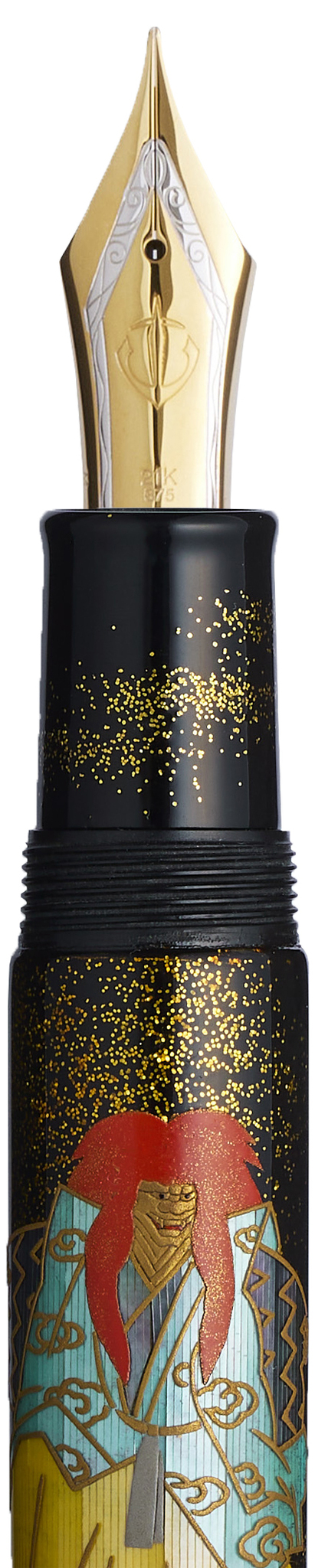
“Shakkyo” is one of the most celebrated masterpieces of Noh, Japan’s classical performing art, set against the legendary Stone Bridge of Qingliang Mountain in China — a sacred place believed to be inaccessible to ordinary beings. The play unfolds in a mystical realm where the lion spirit emerges as the central figure, symbolising strength, wisdom, and spiritual guardianship.
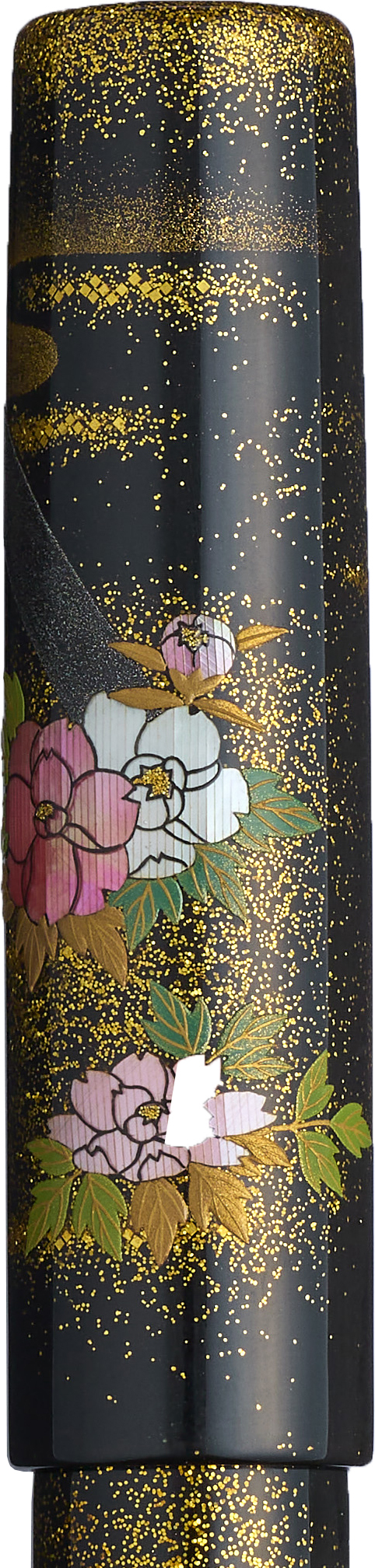
At the heart of the performance is the lion’s wild and dynamic dance, regarded as one of the most demanding and breathtaking scenes in the Noh repertoire. This powerful movement requires extraordinary technique, stamina, and precision, making it a defining highlight of the play. Interwoven throughout the narrative are peony flowers, symbols of nobility, prosperity, and divine beauty, reinforcing the sacred and otherworldly atmosphere of the story.
The costumes and masks used in Shakkyo exemplify the refined aesthetics of Noh theatre. Every detail reflects a deep reverence for nature and the influence of Buddhist philosophy, offering a profound window into the spiritual foundations of Japanese culture.
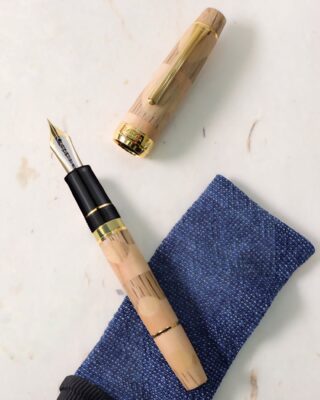
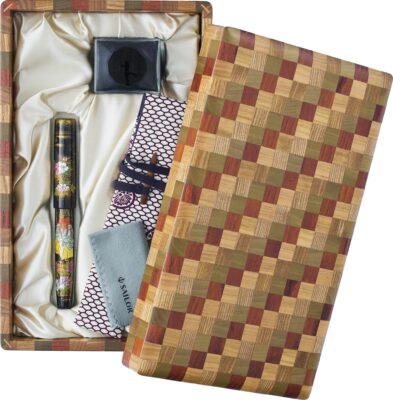
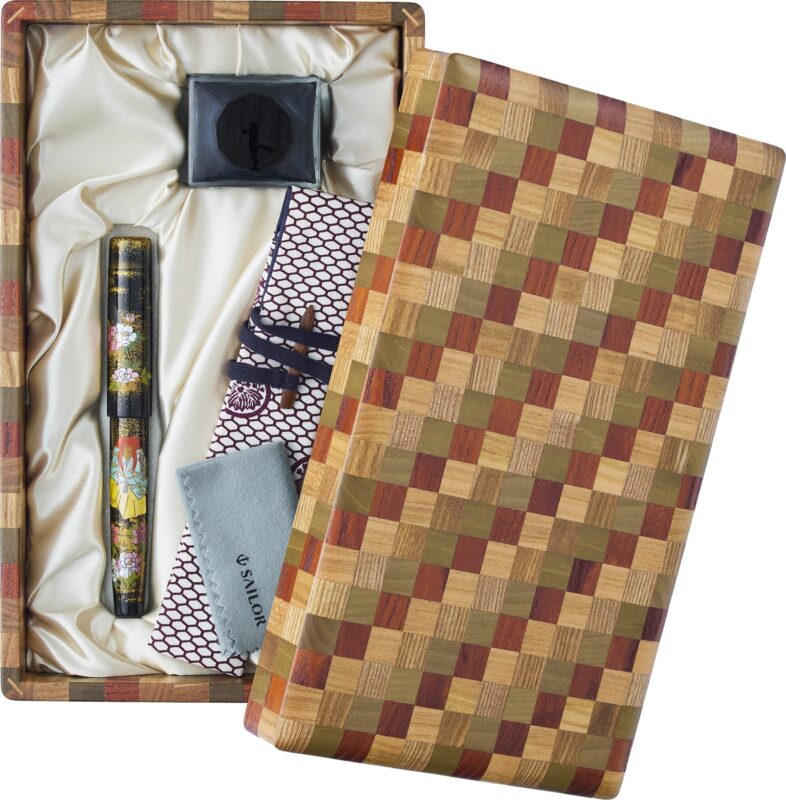
This cultural legacy is echoed not only in the pen itself, but also in its presentation. The accompanying gift box is crafted using Hakone marquetry, a traditional Japanese woodworking technique developed during the Edo period. Created by meticulously piecing together different types of natural wood, the box features intricate geometric patterns that showcase the remarkable craftsmanship and artistic sophistication of the era.
Together, the Sailor King of Pen “Shakkyo” and its Hakone marquetry box form a harmonious tribute to Japanese performing arts, spiritual heritage, and masterful craftsmanship — a collectible of enduring cultural significance.